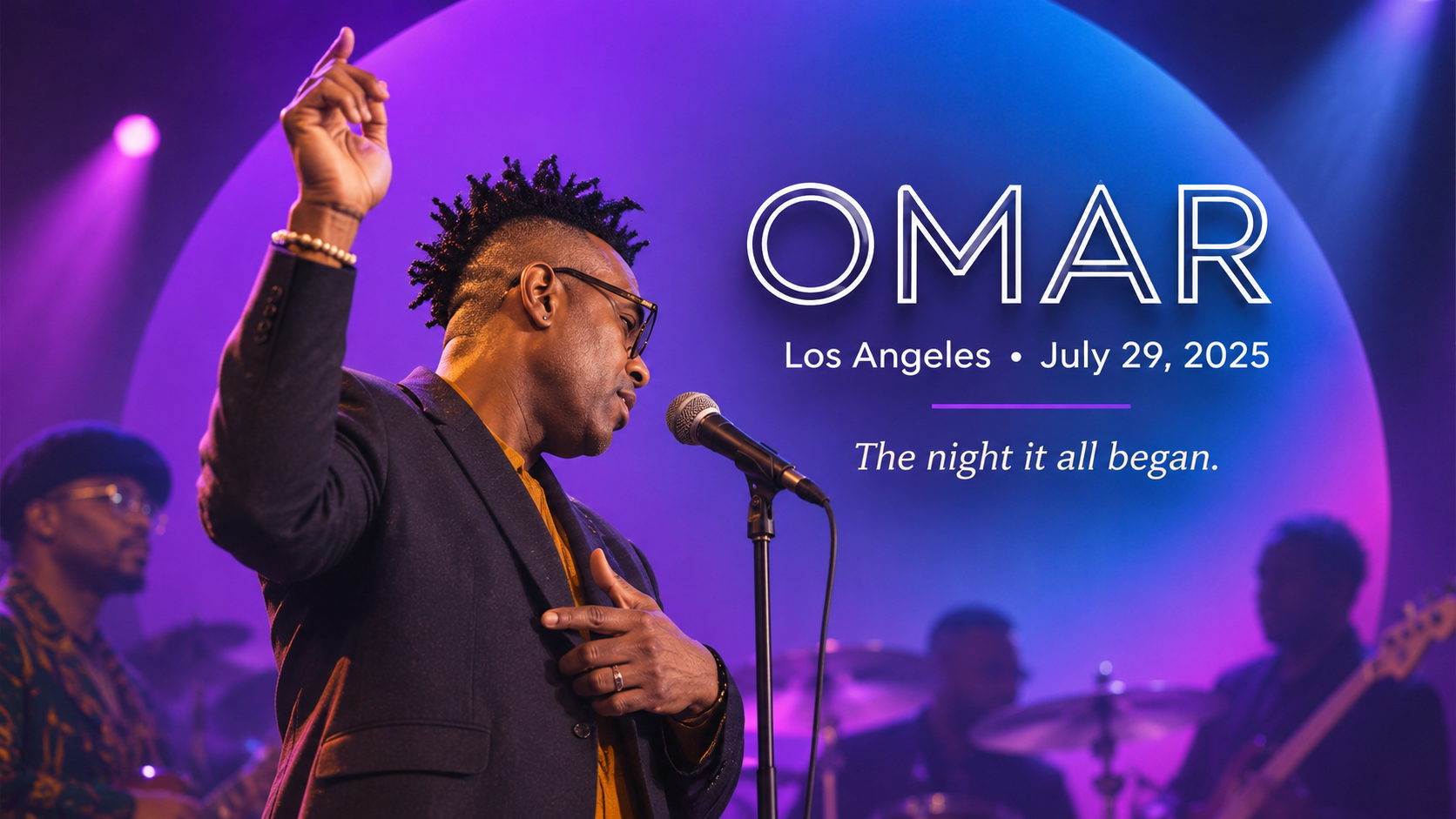
In late July 2025, I traveled to Los Angeles to see one of my favorite musicians, British soul singer Omar.
I'd been a huge fan since the 1990s, when I was playing his records on my radio show at KCSB-FM in Santa Barbara. More than three decades later, he was still making extraordinary music, and I was excited to finally see him perform in person.
The concert was fantastic. I was right up front, close enough to touch the stage, and afterward I even had the opportunity to meet him.
It should have been nothing more than a wonderful evening spent enjoying the music of an artist I'd admired for most of my adult life.
But something stayed with me after the high of the evening wore off.
Here was a musician of extraordinary talent, an artist who had spent decades creating some of the most inventive and soulful music I'd ever heard. Someone whose artistry, consistency, and influence had earned him the admiration of fellow musicians and devoted listeners worldwide.
And there I was, experiencing his music in an intimate venue that held about 500 people, close enough to appreciate every nuance of his performance.
There was something wonderful about that intimacy. I felt genuinely fortunate to be there.
But afterward, I couldn't stop thinking about all the people who weren't.
How many people would have loved that performance just as much as I did, but had never discovered Omar's music? How many devoted fans of soul music had gone their entire lives without hearing one of his records?
It wasn't the size of the audience that troubled me. It was the thought of how many more people might have shared that same appreciation, whether in that room or somewhere else in the world, if only they'd had the opportunity to discover his music.
Not because commercial success is the measure of artistic greatness. It isn't. But because I genuinely believe that his music could reach an enormous audience if more people simply had the chance to hear it.
And there he was, nearly forty years into his career, still creating, still performing, still pouring his heart into the music with the same conviction that had made me a fan all those years ago.
If anything, I admired him even more for it.
What unsettled me wasn't anything lacking in Omar's career or accomplishments. It was the realization that extraordinary music could be out there, waiting to be discovered, while countless people who would absolutely love it might never even know it existed.
And as I thought about that, I realized something even more troubling: I'd made essentially the same observation more than thirty years earlier. Despite all the changes in how we discover and consume music, the struggle to connect extraordinary funk and soul artists with the audiences who would love them hadn't gone away. If anything, it had only grown worse.
An Old Question From College Radio
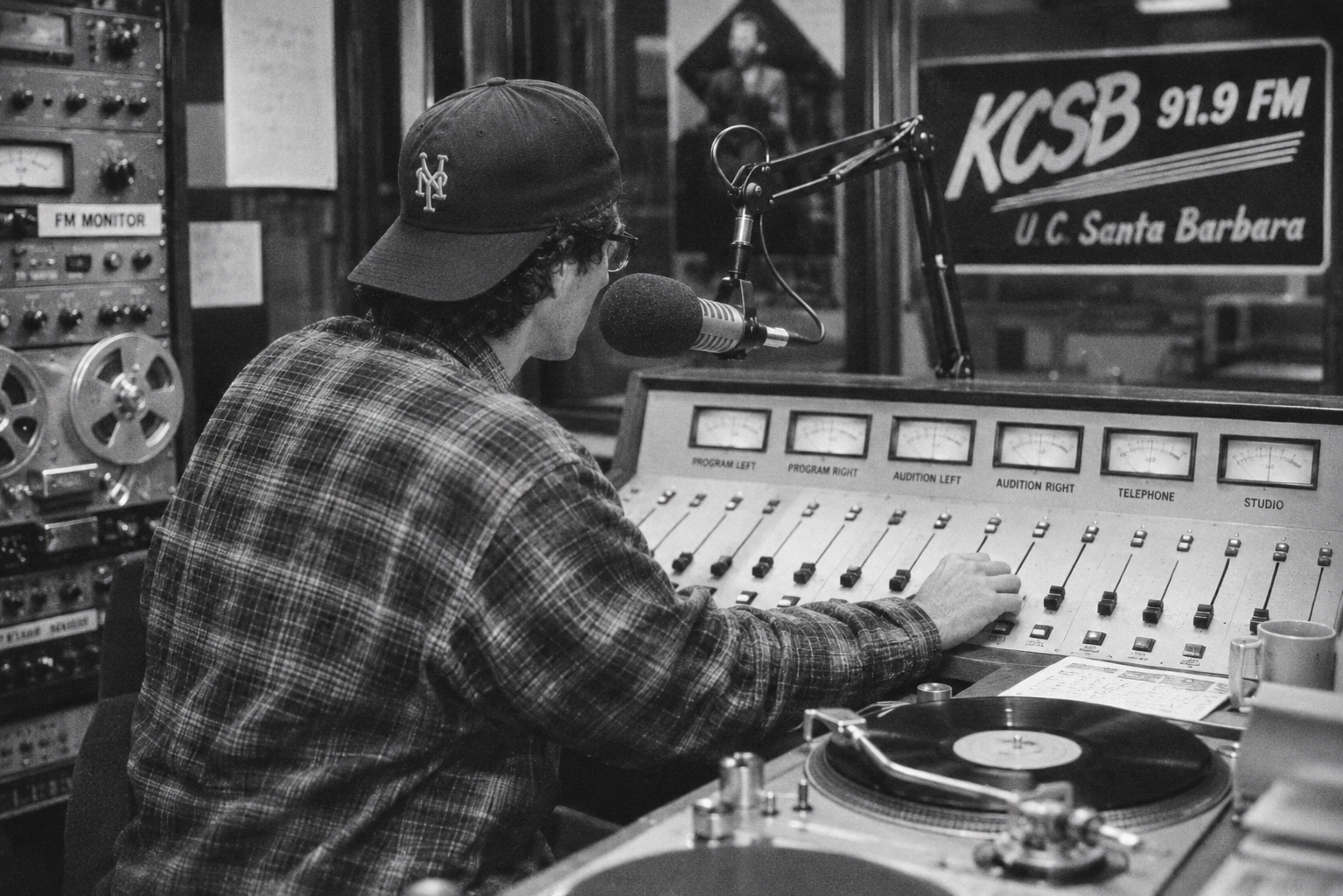
Back in the 1990s, I spent many years as a hip-hop DJ at KCSB-FM, the radio station at UC Santa Barbara.
I loved hip-hop. I still do.
But over time, something interesting happened at the station. More and more DJs arrived, sharing my enthusiasm for the genre. Eventually, we had at least half a dozen shows playing similar kinds of hip-hop on KCSB.
Meanwhile, I served as the director of the station's soul/rap music section, which meant I regularly reviewed new records and selected music for the station's library.
And I kept discovering records that absolutely floored me.
It was an extraordinarily exciting time for funk and soul. Acid jazz was flourishing. Neo-soul was beginning to emerge. Musicians were drawing on the rhythmic foundations of funk and blending them with jazz, hip-hop, R&B, and influences from around the world. The results were often adventurous, inventive, and irresistibly funky.
There was a whole generation of artists making music that honored the past without being confined by it.
And yet, remarkably little of it was finding its way onto the radio around me.
I'd listen to these records and wonder, Why isn't anybody playing this stuff?
The more I discovered, the more convinced I became that there was a disconnect between the music being created and the people who would appreciate it.
It wasn't that people had stopped loving funk and soul. The evidence was everywhere, from the enduring popularity of artists like Parliament-Funkadelic and Earth, Wind & Fire to the crowds that still turned out to hear the classics.
But somewhere along the way, much of that music had become associated with a particular era. For many listeners, funk was something to revisit rather than something to explore. They knew and loved the records they'd grown up with, but might have had little idea how much extraordinary music was still being made in that tradition.
And I couldn't help wondering how they'd respond if someone introduced them to it.
With hip-hop already well represented on KCSB, I decided to take my own show in a different direction.
Together with my co-host, Daniel "D-Knowledge" Fuentes, I launched a program called FunkiKlektiKaos in the LooseEndZone.
Yes, that really was the name.
I'll admit it was a little unwieldy, but there was a philosophy behind it.
Our show followed a program called Jammin' a Little Old School, hosted by Ray Ramos Jr., who played terrific funk and boogie from the 1970s and 1980s.
Ray had cultivated an audience that already loved the funk and R&B music I loved. These were listeners who knew their Parliament-Funkadelic, Earth, Wind & Fire, Rick James, Cameo, and Gap Band.
And that presented an opportunity I found irresistible.
What if I could continue to cater to the audience who were still listening at the tail end of Ray’s show and introduce them to music they might otherwise never have encountered?
Rather than abandon the classics, I wanted to build on them.
We'd dig into the enormous catalogs of old-school artists Ray didn’t play but could be appreciated by much of the same crowd, like the Ohio Players, Sly & the Family Stone, James Brown, and Roy Ayers, pulling out overlooked recordings that deserved another listen. We'd explore forgotten album tracks, obscure releases, and hidden gems from musicians whose familiar hits told only part of their stories.
Then, alongside those discoveries, we'd introduce newer artists whose music carried that same creative spirit forward.
Artists emerging in the 1990s like Omar on the soul side and Slapbak on the funk side. Plus, The Brand New Heavies, Incognito, and a whole generation of musicians creating remarkable music beyond the reach of mainstream American radio.
The connections seemed obvious to me. If someone loved the Ohio Players, why wouldn't they appreciate a contemporary artist exploring those same grooves in a new way? If they loved Stevie Wonder, Roy Ayers, or Earth, Wind & Fire, why wouldn't they be drawn to the soul and musicianship of someone like Omar? After all, The Ohio Players’ “Heaven Must Be Like This” was the blueprint for Omar to create what has become his signature song, “There’s Nothing Like This”.
The music wasn't identical, of course. That was part of the attraction. These newer artists weren't simply recreating the past. They were taking familiar musical foundations somewhere new.
And I believed the listeners would recognize that connection if given the opportunity.
They didn't need to be taught to appreciate funk and soul. They already loved it.
They just needed a way to discover what they hadn't heard.
That was part of the philosophy behind the "LooseEndZone" portion of our show's ridiculous name. We were exploring the loose ends of the musical landscape: forgotten recordings, overlooked artists, unexpected connections, and wonderful music that had somehow fallen through the cracks.
Some of it was twenty years old. Some of it had been released twenty days earlier.
I didn't particularly care.
What mattered was whether the music was good, whether it moved me, and whether I thought someone listening might experience the same excitement I'd felt when I first discovered it.
Looking back, I realize I was already trying to answer the very question that would return to me after Omar's concert thirty years later.
The music was out there. So were the people who would love it.
What was missing was the connection between them.
And I believed that if I could bring the right records to the right listeners, the music would do the rest.
The Radio Station Nobody Could Hear
Eventually, life, love, and career opportunities pulled me in other directions, and my years at KCSB came to an end.
But my passion for discovering music never faded.
I kept collecting records, following musicians, exploring unfamiliar artists, and searching for anything that caught my ear. Despite no lomger having a radio show to program, my personal collection continued to grow, eventually becoming an enormous library of funk, soul, jazz, hip-hop, boogie, and countless musical detours that had captured my imagination along the way.
And as technology evolved, so did the way I listened.
Years ago, I set up a network-attached storage device to house and organize my ever-expanding digitized music collection. With an app on my phone, I could access my entire library wherever I went, essentially carrying decades of musical discoveries in my pocket.
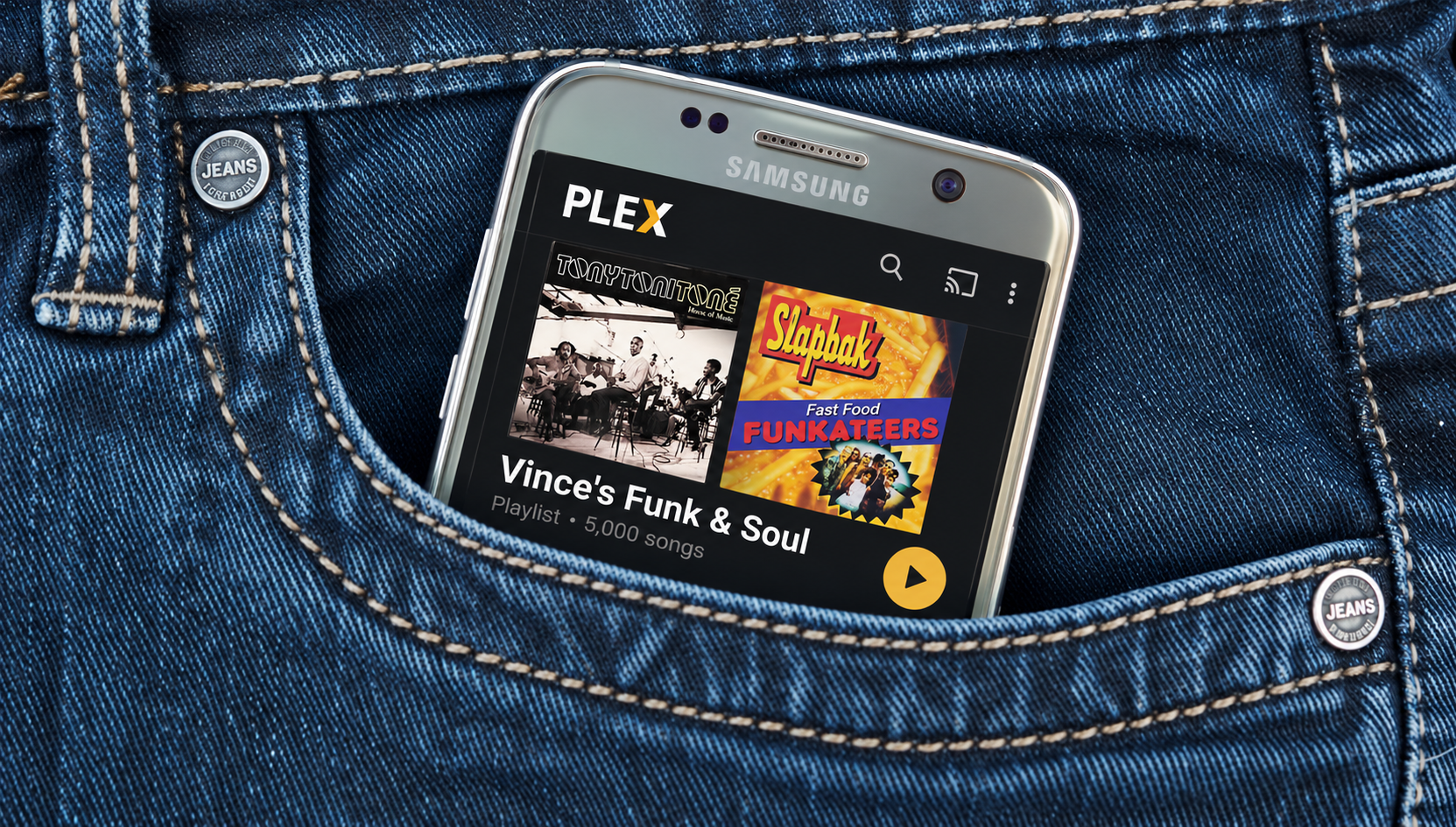
For someone with my tastes, that freedom was invaluable. A sizable portion of my collection consisted of obscure recordings, forgotten albums, rare releases, and music that had long since disappeared from commercial circulation. Streaming services like Pandora and Spotify offered enormous catalogs, but there were still plenty of records I loved that simply weren't available on them.
With my own library, I didn't have to depend on someone else's catalog or an algorithm's idea of what I wanted to hear.
And I never stopped adding to it.
Nearly every day, I'd discover a new artist, track down a long-forgotten favorite, or stumble across some remarkable recording that had somehow escaped my attention for decades.
It was an ongoing obsession, although I prefer to think of it as an unusually thorough hobby.
The funny thing is that, looking back, I realize I'd never really stopped being a radio programmer.
I was still searching for connections between artists and eras, still exploring the overlooked corners of familiar catalogs, still discovering musicians who deserved a place alongside the legends. I was even thinking about how one song might lead naturally into another, or how an unfamiliar recording could reveal something new about music I'd loved for years.
The same curiosity that had driven FunkiKlektiKaos in the LooseEndZone was still very much alive.
The only difference was that I no longer had a transmitter, a microphone, or anyone on the other end of the broadcast.
Instead, I had a vast music library, decades of accumulated discoveries, and a rather opinionated program director who knew exactly what he wanted to hear.
There was just one problem.
The station had an audience of one.
Me.
And for a long time, that was perfectly fine.
Until that evening in Los Angeles.
What If I Could Reach Everyone?
That evening in Los Angeles had awakened something I hadn't felt quite so strongly in years.
It wasn't a new idea. In many ways, it was the same question I'd been asking myself back at KCSB more than thirty years earlier: How do you connect great music with the people who would love it, but might never discover it on their own?
Only now, I found myself looking at that question from a different perspective.
I'd spent decades seeking out extraordinary music, collecting thousands upon thousands of recordings, and following artists whose work rarely received the attention I believed it deserved. I'd also spent eleven years in college radio learning how to bring those discoveries together into something listeners might enjoy.
And without fully realizing it, I'd continued doing much the same thing ever since.
I had the music. I had the experience. I had a lifetime of discoveries I wanted to share.
But nearly all of it was sitting on a storage device in my house, entertaining an audience that already knew every record.
Me.
For years, that had been enough. But after Omar's concert, I couldn't stop thinking about how many other people might enjoy what I'd spent so much of my life discovering.
I started wondering whether it was time to return to radio.
My first thought was KCSB.
Maybe I could put together another weekly two-hour show, just as I'd done years earlier. I could introduce listeners to new artists, explore forgotten recordings, and reconnect with the part of my life I'd enjoyed so much.
The idea was appealing. But the more I thought about it, the more I began to question whether returning to traditional radio was really the answer.
It would require a substantial time commitment, and the radio landscape had changed considerably since the 1990s. Building an audience for a weekly program on a local college station would be a challenge, and even if I succeeded, I'd have just two hours each week to share music from a collection that had taken decades to assemble, all to a very small local audience that might take a long time to discover I exist. From the vantage point of college radio, I would be expending a lot of time, money, and energy, and it wouldnt fundamentally change the problem.
So I began exploring another possibility. Perhaps there was an existing internet station somewhere that would let me host a weekly program from home, but could be heard by anyone in the world. That seemed like a reasonable compromise. I could return to programming music, reach listeners beyond my immediate community, and avoid some of the practical challenges of going back to conventional radio.
But as I started researching internet broadcasting, I discovered something that had never seriously occurred to me.
I didn't need someone else's radio station.
I could create my own.
Not just a two-hour show once a week.
An entire radio station.
Broadcasting twenty-four hours a day, seven days a week, to anyone in the world who wanted to listen.
Suddenly, the possibilities seemed enormous.
I could build the kind of station I'd always wished existed. One that celebrated the foundations of funk and soul while constantly exploring where that music had gone and where it was going. A station where familiar classics could sit alongside forgotten treasures and exciting new releases, connected not by their age or popularity, but by the musical spirit they shared.
And unlike a weekly radio show, it wouldn't have to end after two hours. The discoveries could continue all day, every day.
I'd spent much of my professional life working in information technology, so the technical side didn't intimidate me. If anything, figuring out how to build and operate an internet radio station sounded like an enjoyable challenge.
I began investigating streaming platforms, broadcasting software, licensing requirements, and the practical details of keeping a station on the air around the clock.
And the more I learned, the more I realized how much of the groundwork had already been laid.
I had the music.
I knew how to program it.
I had the technical background to make it work.
And after decades of collecting, I'd assembled a library deep enough to create the kind of varied, constantly evolving musical experience I'd always wanted to offer listeners.
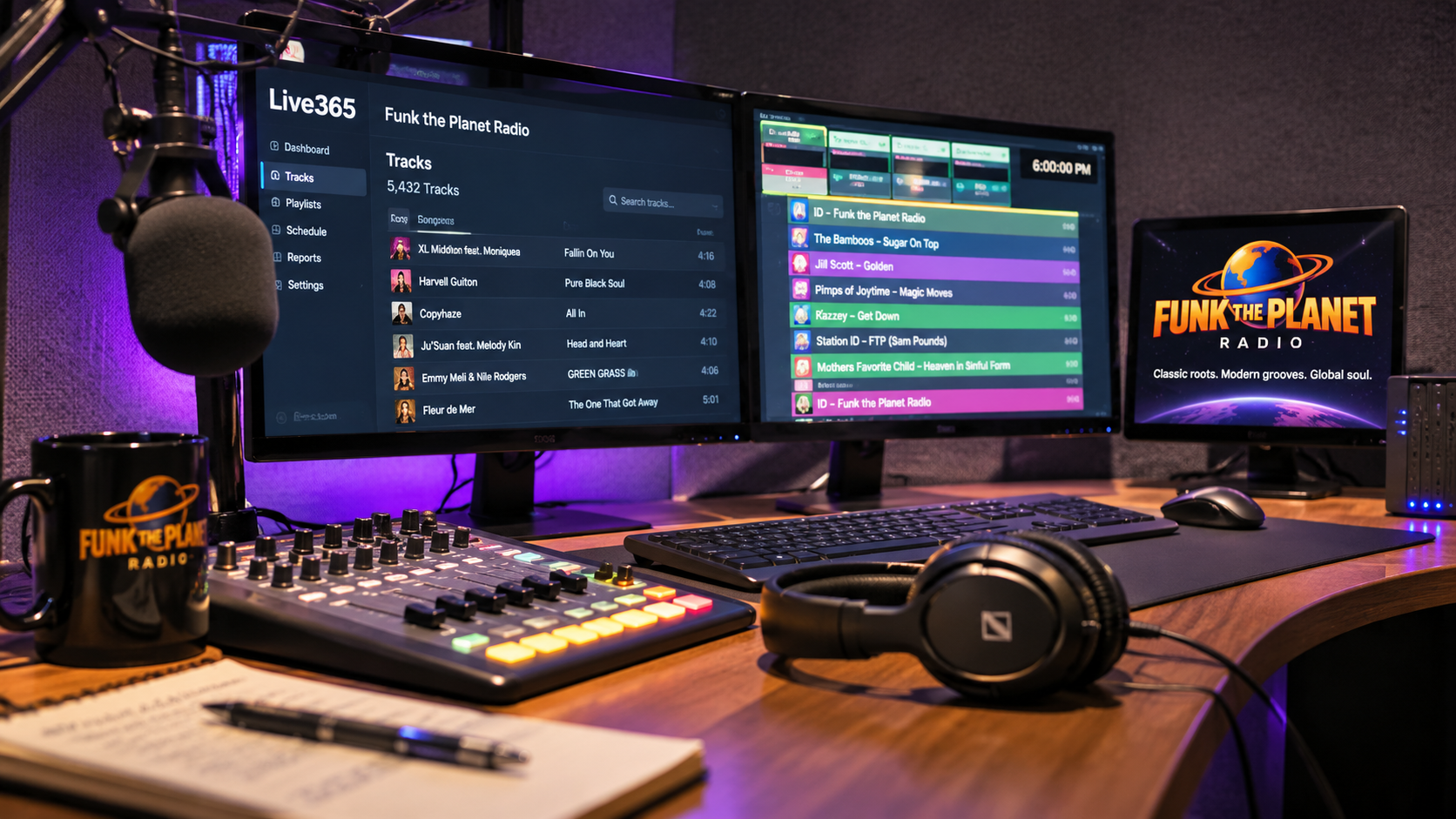
What had begun as a college radio show in the 1990s, and continued for decades as a private passion, suddenly had the potential to become something much bigger.
The music had been there all along. So had the desire to share it.
I'd simply never imagined that I could build an entire radio station around it.
And perhaps that's what made the realization so exciting. I wasn't really starting over. I was picking up a thread that had been running through my life for more than thirty years.
Only this time, instead of programming for a couple of hours each week, I could create a place where the music never had to stop.
On August 3, 2025, just one week after that concert, Funk the Planet Radio was born.
The Classics Are the Benchmark, Not the Boundary
Once I decided to create my own station, I began exploring other internet radio stations devoted to funk and soul to see how they ran things.
Some were terrific. I discovered stations with knowledgeable programmers, impressive collections, and a genuine love for the music.
But as I listened, I noticed something familiar.
Many of them seemed to concentrate almost entirely on music from the past.
And I understood the appeal.
Those records are magnificent. I grew up loving them. They're part of who I am, and I still get tremendous pleasure from hearing them. The music of Parliament-Funkadelic, Earth, Wind & Fire, Prince, the Ohio Players, and countless others helped shape my musical tastes and inspired generations of musicians who followed.
But I kept coming back to the same question I'd been asking at KCSB thirty years earlier.
What about everything that came afterward?
What about the artists who had taken those influences and created something new? The musicians who were keeping the traditions of funk and soul alive while finding their own ways to expand them? The extraordinary records being released every year that so many potential listeners might never encounter?
I didn't want to build another station that relied almost exclusively on familiar classics. There were already plenty of places to hear those songs.
But I didn't want a station that played nothing but contemporary music, either.
That would miss the point entirely.
What I wanted was to bring the two together, to recreate the experience I'd been trying to build at KCSB, only on a much larger scale.
I imagined someone who loved Prince, Parliament, or Earth, Wind & Fire tuning in and hearing something familiar. Then, a few songs later, they'd encounter an artist they'd never heard of who made them stop whatever they were doing and listen.
Maybe it would be an independent funk band from halfway around the world. Maybe a contemporary soul singer whose music carried the same warmth and sophistication as the records they'd grown up with. Or maybe it would be an obscure recording from 1982 that had somehow escaped their attention for more than forty years.
The possibilities were endless.
And the connections between those recordings were what excited me most.
I wanted listeners to hear how the music had evolved, how the influences of one generation could be heard in the work of another, and how artists separated by decades or thousands of miles could still share the same musical spirit.
I wanted new releases to stand alongside the classics, not as novelties or interruptions, but as records that genuinely belonged in the same conversation.
And I wanted those connections to feel so natural that listeners might travel from 1978 to 2025 and back again without giving the passing decades a second thought.
That was the station I wanted to create.
And it's still the philosophy that guides how I program Funk the Planet Radio today.
Every record has to earn its place.
I don't particularly care whether it was released in 1976, 1996, or last Friday. I don't care whether the artist has sold millions of albums or is recording in a home studio with an audience of a few hundred people.
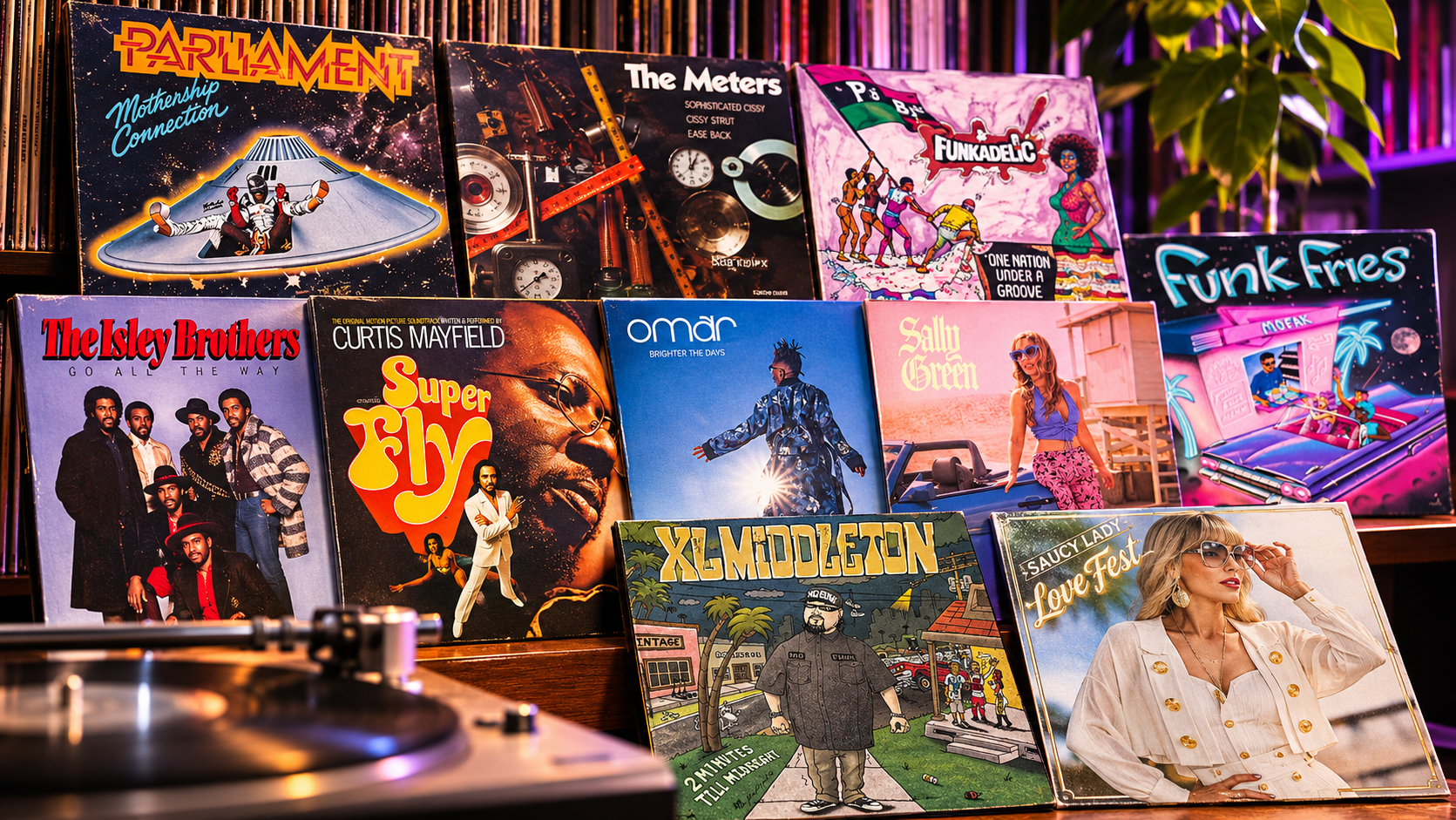
What matters is the music itself. Does it have something to offer? Does it move me? Does it belong alongside the other records I'm playing?
And perhaps most importantly, will someone listening experience that wonderful moment of discovery that has kept me searching for new music all these years?
Because that's the experience I want to share.
I especially want to reach the listeners who grew up loving funk and soul but may have gradually lost touch with what happened next. Not because they stopped appreciating the music, but because the artists carrying those traditions forward weren't always reaching them.
I want them to discover that the musical world they fell in love with never stopped growing.
The rhythms, the musicianship, the creativity, the soul: none of it belonged exclusively to some bygone golden age.
New generations kept arriving. They absorbed the influences, picked up the instruments, experimented with new sounds, and created music that honored what came before while taking it somewhere different.
And all along, there were listeners who would have loved what those musicians were creating, if only they'd had the opportunity to hear it.
That's the connection I wanted Funk the Planet Radio to make.
Because the problem was never that funk had disappeared.
The music never stopped.
Somewhere along the way, too many people simply lost their connection to what came next.
Finding the Loose Ends Again
There's a particular moment I hope every Funk the Planet listener experiences.
You're listening to a song you know and love. Maybe it's something you've heard a hundred times, a record that brings back a memory, puts a smile on your face, or makes you reach for the volume.
Then another song comes on.
You don't recognize it.
But something catches your attention.
Maybe it's the bass line. Maybe it's the horns, the rhythm, or the way the singer delivers a phrase. Something about it feels familiar, yet the music is taking you somewhere you haven't been before.
You find yourself listening a little more closely.
And before long, you're asking yourself:
"Who IS this?"
That's the moment I'm after.
That sudden thrill of discovering something wonderful you didn't even know you were missing.
I've experienced it thousands of times throughout my life, and somehow, it never gets old. There's still nothing quite like hearing a remarkable song for the first time and realizing you've found an artist whose music will stay with you.
And what excites me most is knowing how many of those moments are still waiting to happen.
Because somewhere out there is a musician creating something extraordinary, pouring their talent, imagination, and heart into music that might become somebody's favorite song.
And somewhere else is a listener who would absolutely love it.
They just haven't found each other yet.
I want Funk the Planet Radio to help make those introductions.
In many ways, I'm still doing exactly what I was doing at KCSB more than thirty years ago.
I'm still digging through the loose ends, exploring forgotten recordings, searching for overlooked artists, and following the music wherever it leads. I'm still convinced that someone who loves the funk and soul they grew up with can fall just as deeply in love with something they've never heard before.
And I'm still guided by the same simple belief that inspired my radio show all those years ago: Give people the opportunity to hear something extraordinary, and let the music speak for itself.
The difference is that I'm no longer limited to a two-hour show on a college radio station in Santa Barbara.
Today, someone on the other side of the planet can tune in at any hour and hear a record I discovered yesterday, twenty years ago, or back when I was still sitting in the studios at KCSB.
A song that once seemed destined to remain buried in my personal collection might now find its way into somebody else's life.
Maybe they'll hear it while driving to work. Maybe it'll catch their attention while they're cooking dinner, walking the dog, or simply going about their day.
Maybe they'll look up the artist, explore an album, share a song with a friend, or discover an entire world of music they never knew existed.
And maybe, somewhere down the line, that discovery will mean as much to them as it did to me.
That's what makes all those years of collecting, searching, and listening feel worthwhile.
Because I've come to realize that the greatest pleasure in discovering wonderful music isn't necessarily finding it.
It's sharing it.
I think back to that evening in Los Angeles, standing just a few feet from Omar as he performed music I'd loved for more than thirty years.
I had no idea that night would lead me here.
I certainly didn't imagine that, just one week later, I'd be launching a radio station.
But looking back, perhaps I shouldn't have been so surprised.
The curiosity that first drew me into college radio never really went away. Neither did the excitement of discovering a remarkable record, or the desire to share it with someone who might appreciate it just as much.
I'd spent more than thirty years gathering the music, building the collection, making the connections, and developing my own ideas about what a radio station could be.
I just hadn't realized that was what I was doing.
For most of those years, I had a radio station that only one person could hear.
Now, for the first time, I'm inviting the rest of the world to listen.
And if someone tunes in tonight, somewhere I've never been, and hears an unfamiliar song that stops them in their tracks, then all those years of searching will have helped create something wonderful.
Not because I've introduced them to a record from my collection.
But because I've helped them discover something that now belongs in theirs.
And somewhere, perhaps without ever knowing it, the artist who made that record has reached one more person who loves what they do.
That connection, however small it might seem, is everything I wanted this station to be.
Because the musicians never stopped creating.
The music never stopped evolving.
The funk never disappeared.
The connection was what was missing.
And after all these years, I finally have a way to help bring it back.
One record. One listener. One discovery at a time.
Thanks for listening, and thanks for helping me Funk the Planet.
Vince Leo
Founder & Programmer, Funk the Planet Radio
funkthepla.net
